
91短视频


Radiological Technology
09142023_Health_Science _LOWres-234

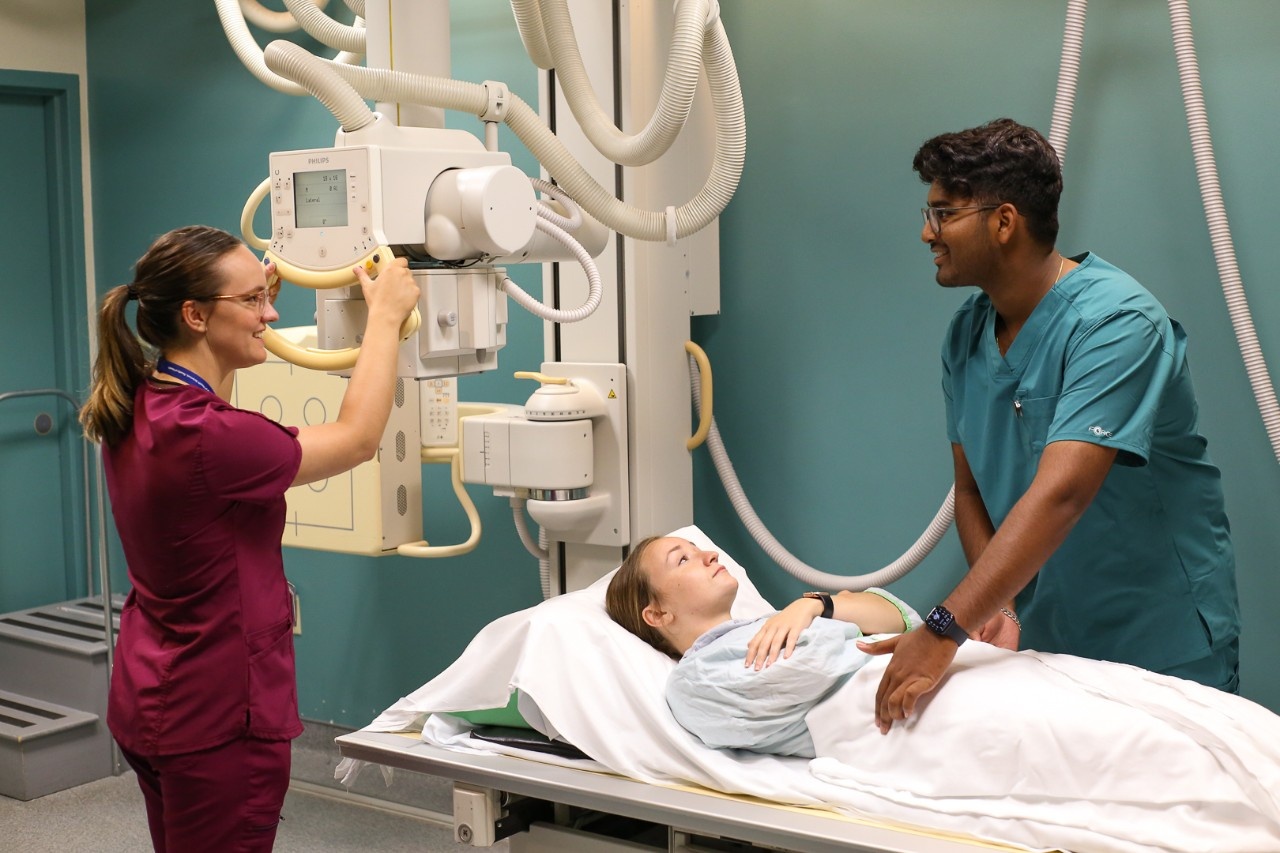
Radiological Technologists are highly skilled health care professionals who care for patients in all age groups - from newborns to older adults. They use x-radiation to create images of patient anatomy for diagnosis and treatment of injury or disease.聽

Radiological Technologists may also be known as Medical Radiation Technologists, X-Ray Technologists, or Radiographers.

How does Radiological Technology work?

An x-ray image is produced when a small amount of radiation passes through a body part and is captured to produce a black-and-white image.

Body parts that are difficult for x-rays to pass through, such as bone, appear white on the x-ray image. Body parts that the x-rays penetrate easily, such as the lungs or other areas filled with air, appear black. Soft tissue (like muscle), blood vessels and organs usually appear as various shades of gray on an x-ray image, depending upon what they are made of.

Once the x-ray radiation passes through the body, it is captured by an imaging plate, connected to a computer, which creates a visible image.

Using their specialized knowledge of the human body, the Radiological Technologist will position the patient based on the area that their physician or care provider has concerns about. The patient may be able to sit down and have the x-rays taken at a tabletop. The patient may also be able to stand up while they take the images, or sometimes, they may be required to to lie down on a table. No matter how the image is taken, the Radiological Technologist will instruct the patient on how to move. The time it takes for the exams are relatively quick. Most images take between 5 and 15 minutes to complete.

Radiological Technologists provide care to patients receiving the following exams and more:

  • An X-ray: digital images of the lung, bones, joints, abdomen, and spine to detect fractures or disease
  • A mammogram: digital images of breast tissue to detect breast cancer in its earliest stages
  • A CT scan (Computed Tomography): cross sectional x-ray images of the organs, bones and tissues of the body
  • Fluoroscopy: A real-time x-ray video showing how the systems, like your stomach and bowel, function in the body. This is also used in operating rooms during surgeries
  • Interventional Radiology: uses fluoroscopy for procedures like biopsies, or for treating conditions of the blood vessels throughout the heart, brain, and body

Where do Radiological Technologists work?

Radiological technologists work in a variety of healthcare settings including hospitals, emergency departments, intensive care units and operating rooms. They use highly technical equipment to perform the following types of imaging procedures on all body systems:

  • Radiography
  • Fluoroscopy
  • Computed Tomography (CT)
  • Angiography and Interventional
  • Mammography
  • Bone Density

Radiological technologists may also work in related areas:

  • Education
  • Research
  • Administration
  • Radiation Safety
  • Imaging equipment sales
  • IT


How do I become a Radiological Technologist?

To become a Radiological Technologist, individuals must attend and successfully complete an accredited Radiological Technology program.

The School of Health Sciences offers a four year Bachelor of Health Sciences (BHSc) degree program, which includes theory and practice.

Graduates must write national registration exams and meet the clinical requirements set by the Canadian Association of Medical Radiation Technologists (CAMRT) in order to work.聽Those who pass the exam may use the designation "Registered Technologist in Radiological Technology" (RTR).

91短视频's Radiological Technology program curriculum offers the necessary competencies to challenge the Canadian Association of Medical Radiation Technologists (CAMRT) professional examination.

Is Radiological Technology right for me?

What are the essential skills and attributes of a Radiological Technologist?


Entrance Requirements

To be considered for admission, High School applicants require grade 12 academic English, Math, Physics and one of Chemistry or Biology with no mark below 70% in each of these courses and an overall minimum average of 75%. Post-secondary applicants require a minimum GPA of 2.75 (on a 4.30 scale), with no grade lower than C in prerequisite courses.聽

Applicants are also required to submit non-academic documents to be considered for admission.

The Radiological Technology program accepts 26 total students annually.

Priority admission in the Radiological Technology program will be given to qualified Nova Scotia residents.聽 If seats remain, residents of other Maritime provinces followed by residents across Canada will be considered.

Due to residency restrictions and limited capacity, international applicants will not be considered for admission to the BHSc program.

Admission is competitive, and meeting the minimum entrance requirements does not guarantee admission.

For further details on the application process and other considerations, please review our Admissions wepbage.

Courses in the Radiological Technology program

Examples of courses in the program:

  • Anatomy and Physiology
  • Skeletal Radiography
  • Imaging Equipment
  • Applied Pathology
  • Health Care Ethics
  • Clinical Skills for Health Practice
  • Digital Imaging
  • Introduction to Health Practice

View all required courses and descriptions for the Radiological Technology Program&苍产蝉辫;禄


Clinical Education

For full details on Clinical Education, including preclinical requirements, please review our Clinical Education webpage.

One of the benefits of studying at the School of Health Sciences is the opportunity to do hands-on clinical work. In years 1, 2, and 3, every student spends 6-8 weeks during the summer term completing a clinical practicum in a healthcare setting. In addition, third year students complete multiple clinical education courses directly in the clinical environment to help prepare them for entry to practice.

Most students complete their practicums throughout Atlantic Canada, while others travel to locations across the country. Students should be prepared to travel outside of Halifax or their home communities for their clinical placements. Placement opportunities are based on clinical site availability and are subject to change from year to year. Health Sciences students are provided with more information about availability and options before each clinical experience.

Accreditation

Accreditation Canada is the program's accrediting body. Further information can be found on , including a list of all accredited Radiological Technology programs within Canada.

Professional Associations

is the national professional body for Radiological Technologists.

 (formerly known as NSCMIRTP) is the Provincial Regulatory Body for Radiological Technologists in Nova Scotia.

Job Opportunities

Radiological Technologists are in high demand provincially, as well as throughout Canada.

Registered Radiological Technologists are qualified to work anywhere in Canada and any country which accepts the CAMRT designation. Working hours and salaries may vary from province to province.

For current job opportunities, please visit:


Ready to apply?

Please review our Admissions webpage, which includes information on the application process, non-academic requirements, and other considerations, such as additional costs and residency eligibility.