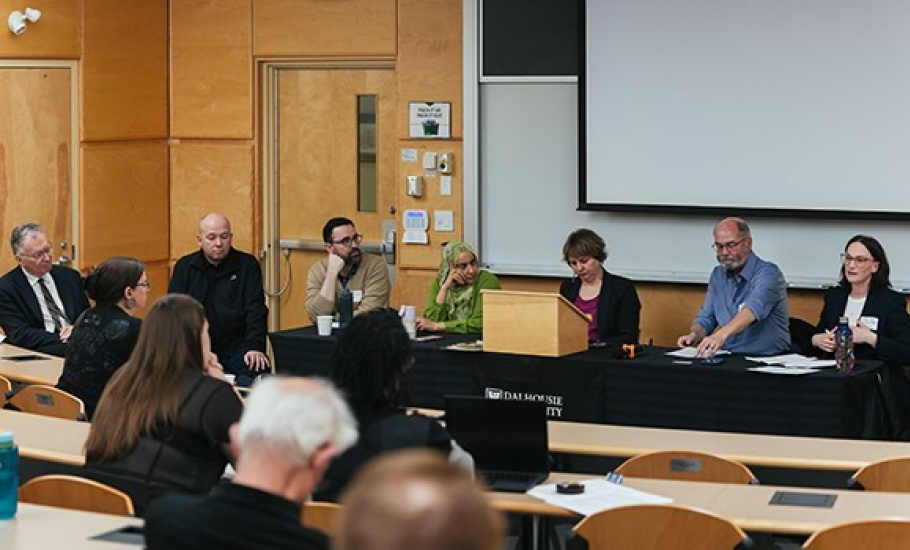

One day. Hundreds of eager minds.听
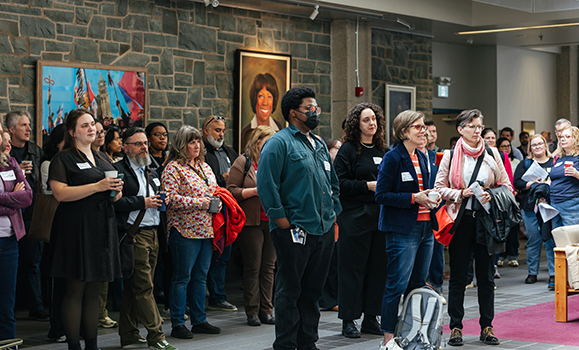
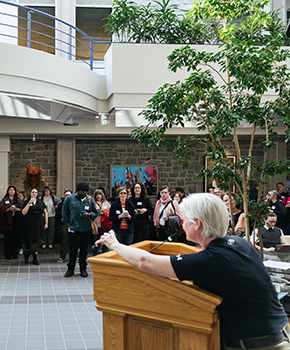
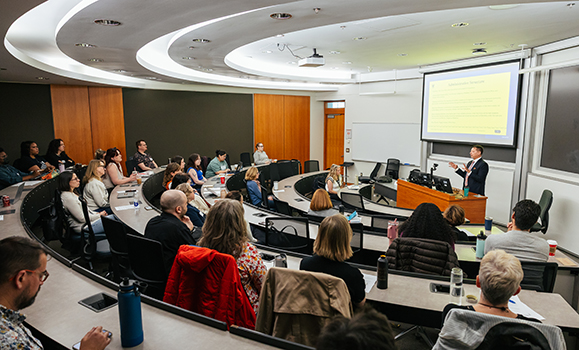
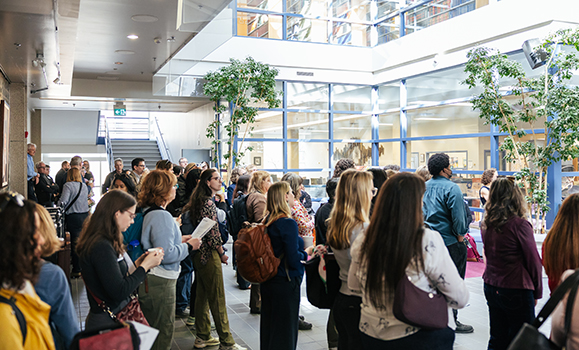
91短视频 Engagement Day, an annual spring gathering started in 2024, brings faculty and staff from many corners of the university together for a day of learning and connection.听
This year, panels and workshops covered student experience and retention, teaching and learning, AI and its uses, civic engagement, equity and workplace culture, Indigenous relations, research impact, and understanding the physical side of campus.听
We asked some presenters and participants about their experience at last Friday's event.
Bella Marble
Undergraduate Academic Advisor, Indigenous students, in the Faculty of Management
My biggest takeaway was seeing how far 91短视频 has come as a university over the past decade or so that I鈥檝e been around campus. The first session I attended was John R. Sylliboy鈥檚 presentation. The creation of John鈥檚 position, the Vice-Provost of Indigenous Relations, was something the Mi鈥檏maq/Indigenous community has been asking the university to do for quite some time and the work he is doing is very important to the university as a whole. It鈥檚 been refreshing to see reports from the late 2010s/early 2020s being implemented.听
Another takeaway is 鈥榯he importance of outreach鈥� from the session on the Nova Scotian Engagement Days and the wonderful lessons that are coming out of that important work. Relationship building at the university level, as a province, and bringing together multiple perspectives and voices is strengthening the university and re-enforcing our connections from current alumni/staff, to past graduates, to the communities, to Nova Scotian businesses, and to future students. We鈥檝e really advanced in taking on a holistic and inclusive perspective in our community outreach and engagement.
 听
听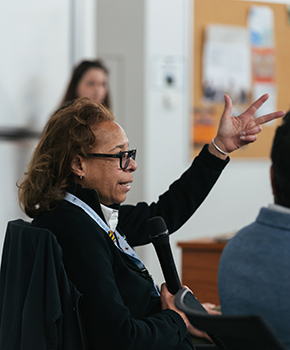 听
听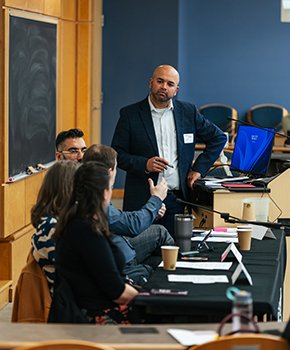
Dr. Floris Goerlandt
Associate Professor & Canada Research Chair in Risk Management and Resource Optimization for Marine Industries, Faculty of Engineering
One session that stayed with me was the discussion on AI and the student experience. I appreciated that the conversation moved beyond simplistic questions about academic integrity and instead focused on how students are actually using AI in their learning: as tutors, brainstorming partners, study aids, writing supports, and organizational tools. The student perspectives were thoughtful, pragmatic, and more nuanced than I expected.
The discussion also highlighted the need for clearer guidance on acceptable, critical, and responsible use of AI across programs, and addressed the perceived gap between student and faculty familiarity with AI tools.
听I found myself reflecting that questions about appropriate AI use ultimately connect to a broader question about the purpose of higher education itself.
Listening to these experiences, I found myself reflecting that questions about appropriate AI use ultimately connect to a broader question about the purpose of higher education itself. Is it primarily oriented toward practical skills, efficient production of useful outputs, and preparation for an AI-enabled workplace? Or is its ultimate value rather in cultivating a more demanding form of intellectual formation, in which students develop independent judgment, disciplined reflection, and the ability to contend with ambiguity and complexity without immediate external assistance? AI makes this tension more visible. These are not new questions, but they certainly remain important ones.
 听
听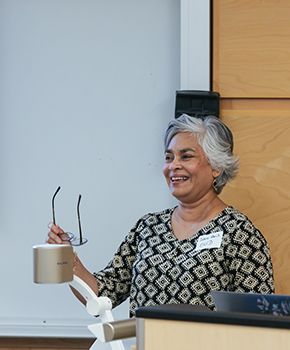
Megan Fuller
Director of Research for the Atlantic First Nations Water Authority, Center for Water Resources Studies
It鈥檚 easy to focus on my small corner of the university and lose touch with the tremendous amount of great work 鈥� pedagogy, outreach, engagement, and research 鈥� happening across classrooms, labs, and campuses. 91短视频 Engagement Day brings us together to share stories and learn from our colleagues. I鈥檓 interested in contributing to 91短视频鈥檚 role as a civic leader in the province and enjoyed learning about several community-engagement and community-building initiatives happening at the Agricultural Campus. Taking the time to come together and share our experiences reminds me of the value of our work and inspires me to collaborate more and dream bigger.听
听 听
听
Sandra Dwyer
Human Resources & Access Services, Dal Libraries
The first session I attended highlighted the critical role that a sense of belonging plays in student success and retention. The session emphasized the student journey as a holistic experience, shaped by both academic and non-academic interactions. This prompted me to reflect on the libraries as a central and often constant presence throughout that journey. Libraries are more than places to study; they are spaces where students seek support with their academic assignments as well as connections as they navigate their academic lives.
It led me to consider the many ways libraries contribute to cultivating belonging.
This reflection led me to consider the many ways libraries contribute to cultivating belonging. We strive to provide welcoming spaces, supportive and psychologically tuned interactions, inclusive programming, and access to resources that empower students to succeed. At the same time, this session raised an important question: are we doing enough? There may be opportunities to be more intentional about how we communicate our role in supporting students.
I came away thinking about the real-world value in collaboration. Partnering more closely with other university departments like student affairs, residence life, and the student union could help strengthen a network of support that reinforces belonging. By working together, we can enhance student experience, improve retention, and ensure students feel seen, supported, and connected throughout their time at 91短视频.
 听
听
Dr. Muhammad Hassan Raza
Program Chair, Master of Engineering in Internetworking, Faculty of Engineering
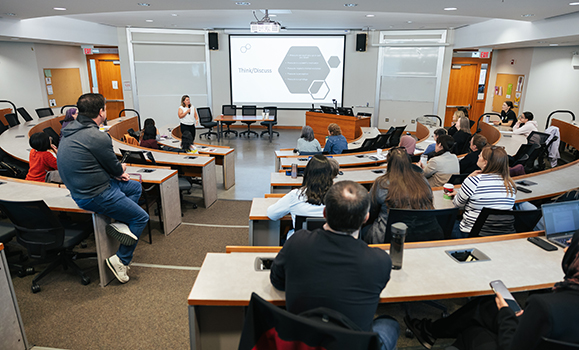
91短视频 Engagement Day always stands out for me. It's one of those events that pulls everyone in from different campuses and lets you actually talk face to face with people you might not see otherwise. I mean, for some colleagues, this is the only time we cross paths all year.
What gets me about it is breaking out of the daily grind. You get to chat with folks from all sorts of jobs and areas, and its pretty open, no hierarchies getting in the way. These talks can shift your view on things, maybe spark some new thoughts. It feels like a chance to question the usual ways we do stuff.
It feels like a chance to question the usual ways we do stuff.
This year stuck with me especially. I heard about what Information Technology Services is doing next, and how Academic Quality Assurance might help build those new programs. The artificial intelligence parts were solid, too. Students shared their takes, faculty jumped in, and even the Office of the Chief Information Officer had some insights. It seems like AI is changing a lot around here, though we are not totally sure how it all fits yet.
I always walk away feeling more plugged into the whole 91短视频 scene. Informed, yeah, and kind of motivated. Connected in a way that's hard to get other days.
 听
听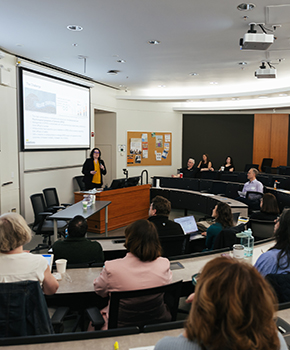
Karen McCrank
Director of Career & Leadership Development Centre in the Bissett Student Success Centre
Throughout the day, I kept thinking about the two piers of Dal鈥檚 new strategic plan: people and place, and how they were reflected in the energy and engagement I saw at the conference. Community kept coming up in everything I saw, heard and experienced that day.听
In one session, I reflected with colleagues about the importance of space and place and saw people light up as they spoke about their favourite places on campus and imagined the possibilities for what our campus community could look like with greater intention and human-centred design.
I imagined what our campus community could look like with greater intention and human-centred design.
Over lunch, I met a new colleague and we quickly started sharing what we love about our work. She asked what impact I hope to make at Dal and I talked about creating positive change for and with students and partners through the Transition and Engagement Framework and the Undergraduate Advising Framework. Presenting with a team of colleagues on each of these strategic initiatives that day, I reflected on how they enable collaboration with talented and visionary student leaders and partners to address current challenges and create a path forward.
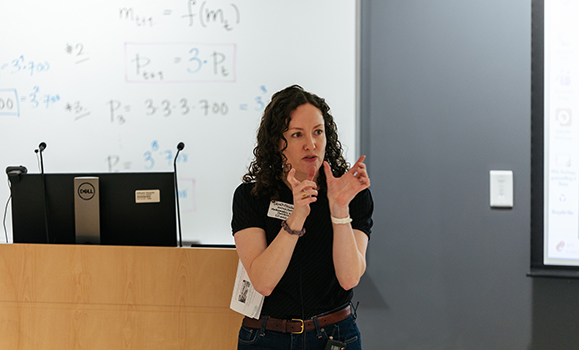
One example that we highlighted in our presentation on the Transition and Engagement Framework focused on off-campus students. In our analysis of sense of belonging indicators, we saw a steady decline over the past three years among this group. In response we proposed and secured a student fee that would support the creation of a student-led council to expand support, programming, and resources to off-campus students, strengthen connection and community to a group who have faced challenges in feeling fully engaged.听听
 听
听
Jonathan Amyotte
Director, Digital Solutions, Information Technology Services
91短视频 Engagement Day was a great opportunity to connect with colleagues and, for me, a valuable exploration of how artificial intelligence is being considered and applied across the university. I attended several AI-focused sessions, including panels on governance and policy, current use cases at 91短视频, and foundational concepts. Across these sessions, a clear theme emerged: there is both significant interest and thoughtful engagement happening around this rapidly evolving space.
What stood out most was the quality of the discussion.
What stood out most was the quality of the discussion. Participants were asking insightful, practical questions and clearly considering how AI could be applied within their respective units. In the hands-on session I facilitated, we explored how to build effective AI agents, and the importance of including goals, context, sources, and expectations when prompting. The high level of engagement reinforced that the Dal community sees AI as a powerful tool with meaningful potential for both individual and institutional work.
There was also a strong sense that success with AI at 91短视频 will depend on collaboration and shared effort. Overall, the day was filled with inspiring conversation.
 听
听
Dillon Hughson
Advisor, Indigenous Student Centre
This is my first time attending Dal Engagement Day, and one of the things I鈥檝e really enjoyed is getting a glimpse into all the different work happening across the university. From policy initiatives in progress to current research, to hearing firsthand reflections directly from students, it鈥檚 been great to step outside my usual day-to-day routine and learn about topics I wouldn鈥檛 normally get a chance to explore.
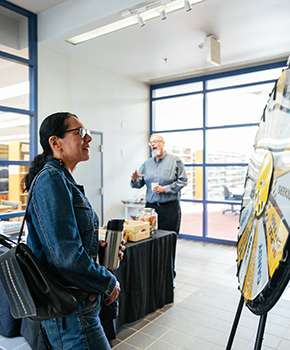
Another highlight has been connecting with both familiar faces and new colleagues from across campus. There鈥檚 something really nice about running into someone before a session and chatting about what brought you both there and why you picked it. I鈥檝e especially enjoyed the quick hallway conversations between sessions - those few minutes to debrief before heading to the next session added a fun momentum to the day. It鈥檚 a lively atmosphere where you never quite know who you鈥檒l end up chatting with next.